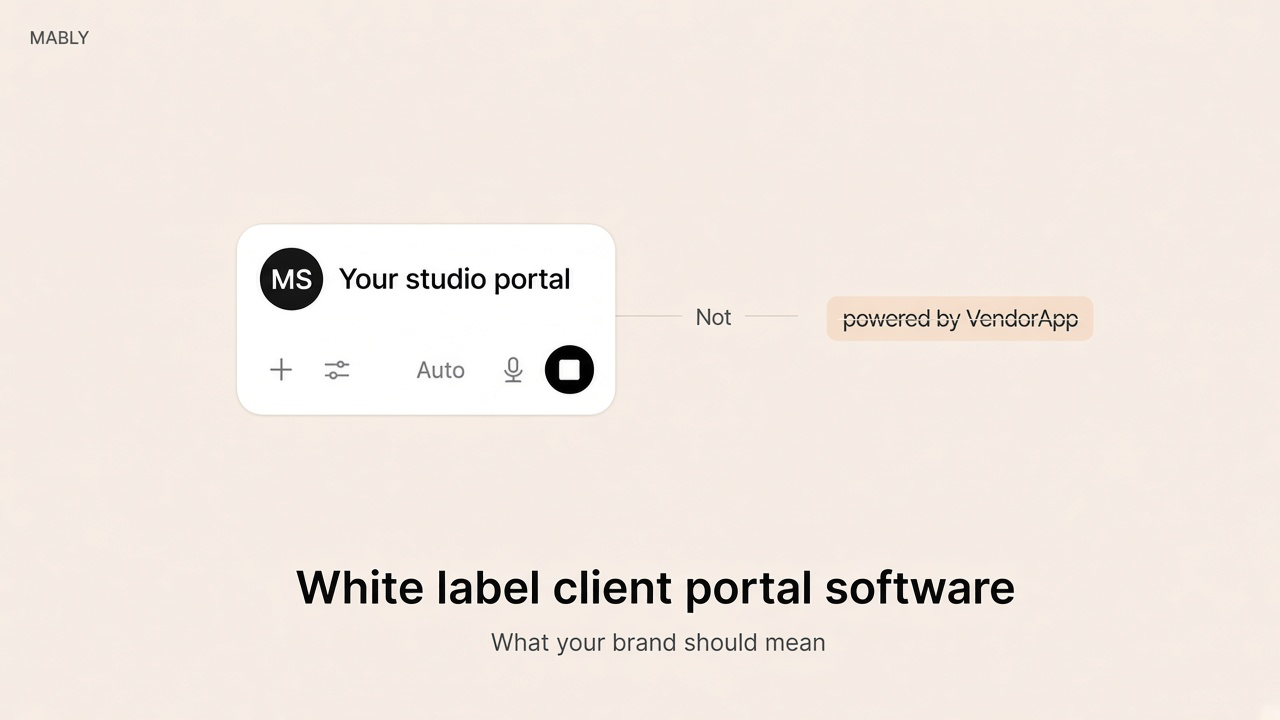
You searched white label client portal software because you don't want clients logging into someone else's product. You want the portal to feel like yours — logo, colours, maybe your domain — so the experience matches the invoice.
"White label" is also one of the slipperiest phrases in software sales. Sometimes it means a full custom domain and emails from you. Sometimes it means your logo in a header while the vendor's name still sits in the URL and the footer. This guide sorts what matters for freelancers and small agencies before you buy.
What white label means for a client portal
In plain terms: the client-facing portal carries your brand, not the vendor's. Clients should feel they opened a space from your studio or agency, not a third-party app they have to trust separately.
That usually sits on a spectrum:
- Logo and colours — your mark on their pages. Baseline.
- Custom domain — portal.youragency.com instead of you.vendorapp.com.
- Branded emails — invites and "ready for review" notes from your domain, not noreply@vendor.
- No vendor chrome — no "powered by" on every screen, no vendor favicon, no upsell to the client.
If a plan only does step one and markets itself as white label, read the fine print. For many small teams, logo + clean URL + quiet vendor presence is enough. Enterprise resellers need the full stack.
Why branding matters more than it sounds
Clients already juggle tools. A portal that looks like your brand reduces the "is this legit?" pause when they click a link from email. It also keeps the relationship coherent: proposal, portal, invoice, same visual language.
Agencies feel this when multiple stakeholders join mid-project. A stable, branded link is easier to forward than a vendor subdomain nobody recognizes. That ties to how an agency client portal should work day to day — one place, obviously yours.
What to check before you call it white label
- Where does the logo appear? Header only, or login, emails, and mobile too?
- Can you use your domain on the plan you'll pay for? Custom domains often sit on higher tiers.
- Do notification emails show your name? Clients ignore mail from tools they didn't choose.
- Is the vendor visible to the client? Powered-by footers and default favicons break the illusion.
- How fast can you brand the next client? If every account needs a designer hour, white label becomes ops debt.
- Does branding distract from the job? A beautiful skin on a confusing portal still fails the no-tutorial test.
White label is not the same as building your own portal. DIY builders can look fully yours and still leave you maintaining filters, empty states, and permissions. Branding and ownership of the product are different costs.
White label vs build-your-own
Softr, Bubble, WordPress plugins, and Notion templates can be white-labeled in the visual sense. You control the UI. You also own every edge case. Bought portal software with white-label options ships delivery workflows — files, feedback, approvals — and lets you skin them.
Choose build when the portal is part of what you sell (a productized ops layer). Choose branded software when you sell design, marketing, product, or consulting work and only need the client layer to look like you. Client portal software for small business covers the broader buy checklist.
Features that still matter more than the logo
A white-labeled mess is still a mess. Before you pay for domains and themes, confirm the portal does the delivery job:
- Latest file and status are obvious on the first screen
- Feedback sits on the deliverable
- Approvals are a record, not a Slack emoji
- Sign-in is light (magic link or email code)
- One client never sees another
Those are the same basics as any client portal for freelancers. Branding wraps them; it doesn't replace them.
Where Mably fits
Mably is client portal software with your brand on the experience: a branded link per client, your look on the space they open, files with status, feedback, and approvals. Clients sign in with a magic link or email code — no walkthrough to find the vendor underneath the paint.
If you need a full white-label reseller platform to sell portals to other companies, that's a different product category. If you need your clients to open something that feels like your studio, start here.
A client portal under your brand
One branded link per client. Files, feedback, and approvals — without a powered-by scavenger hunt.
Try Mably freeWhat is white label client portal software?
Client portal software you can brand as your own — typically logo and colours, often a custom domain and branded emails — so clients experience the portal as part of your business rather than a separate vendor tool.
Is logo upload enough to call a portal white label?
It's the minimum. Many products still show the vendor in the URL, emails, or footer. Decide whether that bothers your clients before you buy the "white label" tier.
Do freelancers need a custom domain?
Nice to have, not always required. A clear branded link and your logo on the pages clients see usually matters more than DNS setup on day one. Agencies with many stakeholders often want the domain sooner.
White label portal vs building in Softr or WordPress?
Builders give maximum visual control and maximum maintenance. White-label portal software gives you branding on top of delivery features you don't have to invent. Pick based on whether you're selling a portal product or delivering client work.
What should I test in a trial?
Upload your logo, open the client view on your phone, send yourself an invite email, and note every place the vendor still appears. Then confirm files, feedback, and approvals still work without a tutorial.
.webp)